


Web storefront
Nuxt SSR
In the platform core
Digital studio
A&W
Turnkey e-commerce platforms
We'll automate your accounting, launch sales in Telegram and grow repeat purchases. A product platform that scales with your business. Results in 3 weeks
This case is already live
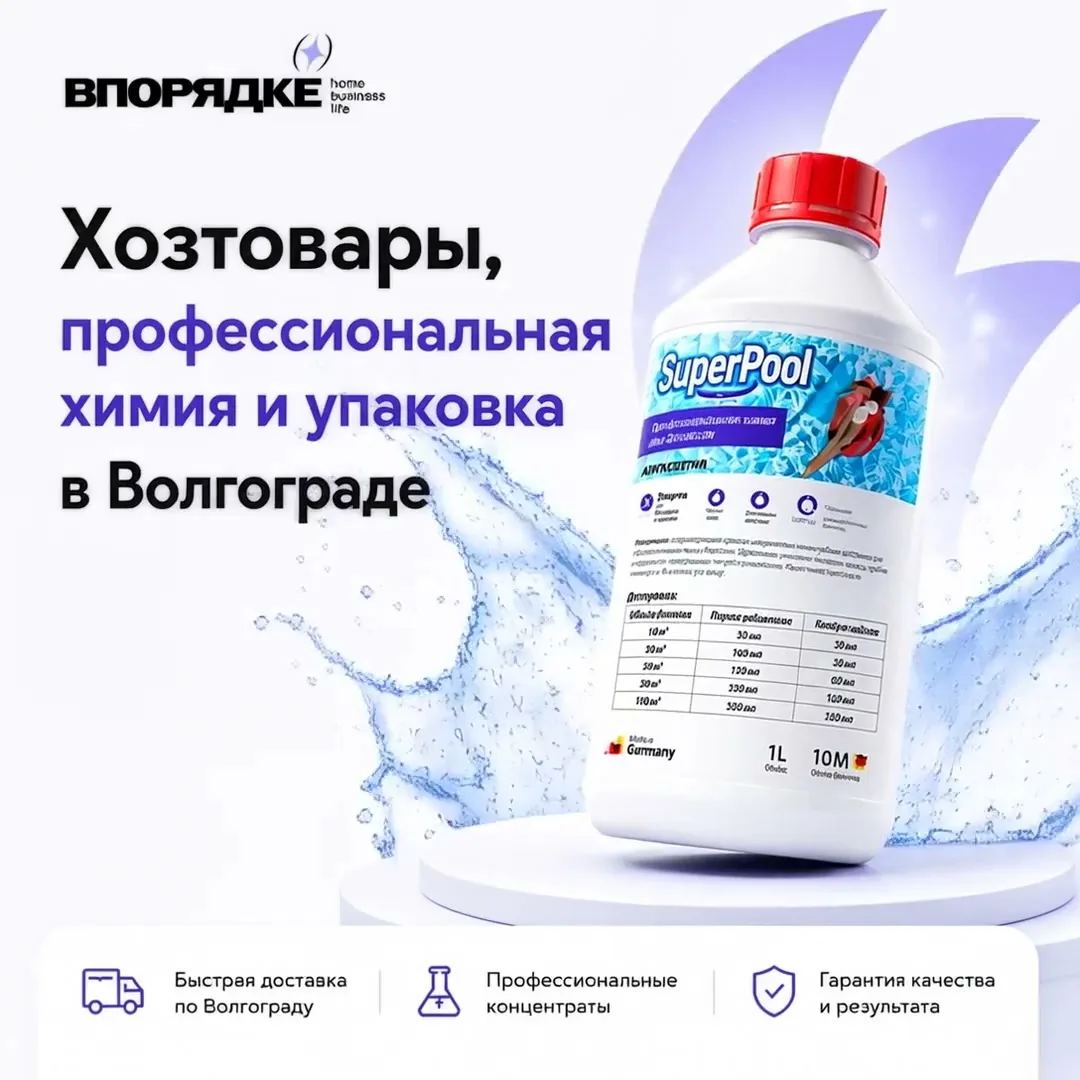
Vporyadke.rf — wholesale and retail for HoReCaThis is the ceiling a store hits once it outgrows template solutions.
A customer places an order, then a manager calls back to apologize. Every call like that is a lost sale and a hit to trust.
Managers retype orders from the website into 1C. Errors, typos, lost orders. Instead of selling — copy-paste and double work.
Business customers find it inconvenient to buy on your website — they call and ask for invoices and company details. You lose B2B clients because they have no client portal with their prices.
No bonus points, no reason to come back and no channel to remind customers about you. You keep paying for ads, while past customers are ready to buy again.
Stop losing money. It's fixable in 30 days.
This is the platform's CRM panel: catalog, orders, loyalty and broadcasts are all managed from one interface.
A customer signs in from the website, Telegram or VK and lands in their existing account instead of creating a third one. Accounts are merged by phone number: one cashback balance, one order history, one delivery address. Seamless for the buyer — and for you, a single customer profile instead of three.
Nuxt SSR
In the platform coreMini App and bot
In the platform coreMini App on VK Bridge, sign-in with VK ID
Added as a moduleMini App and bot
Added as a moduleThe phone number is the identity key. Profiles from Telegram, VK, MAX and the website merge into a single user: numbers are normalized to one format, so no duplicates pile up. If auto-matching fails, an operator links the profiles manually in the admin panel.
Flash call, SMS or sign-in with a messenger account. In VK — OAuth 2.1 with PKCE; in a Mini App — an initData signature. Shoppers never have to create or recover a password.
Audience segmentation, consent tracking for broadcasts, scheduling and pausing, link click tracking, auto-unsubscribe when a user blocks the bot. A tool for bringing customers back, not blind spam.
New orders reach managers wherever they work: a push notification with sound right in the CRM panel, an email, a message in Telegram, MAX or VK. No order sits unread until the end of the shift.
Three common ways to get an online store — and where each one hits its ceiling.
Two production deployments on one codebase — the platform is replicated, not rewritten.
API-first architecture lets you start with your top priority and grow the platform step by step — this answers the “too expensive, too slow” objection.
We automate the catalog, stock and prices from your accounting system. The quickest win: manual work disappears from the storefront.
We add cashback as a retention tool — without rebuilding your existing site.
A Mini App and bot in Telegram or VK on top of your current store: a new sales channel, with your storefront left untouched.
Three transparent layers: you pay for deployment, then for support and ongoing development.
Instance deployment, branded theme, accounting sync setup, catalog migration, team training.
One-time payment in stagesHosting and backups, monitoring, product updates and support under an agreed SLA.
MonthlyFeatures and integrations beyond the core, built around your company's specific processes.
Hour packageThe cost depends on catalog size, the number of integrations and whether you need to migrate from your current site. We set the price range and milestones in a proposal — after a free audit.
The first two steps come with no obligation.
We review your current site and give you an honest assessment of the migration's SEO risks. No obligation.
Catalog size, an “old URL ↔ SKU” export, your accounting system setup and who maintains it.
Scope, stages, timeline and price range. What's included and what isn't — always in writing.
Every stage delivers a measurable result: a deployed instance, a working data exchange, a catalog on the storefront, a launch.
An e-commerce stack: product core, accounting integration and sales across every channel.
The core runs on Laravel 12 + GraphQL + PostgreSQL with Redis queues: sync with your accounting system, loyalty calculations and a single contract for the web, Mini App, CRM and bot. No boxed CMS, no plugin zoo.
It's the biggest — and entirely rational — fear of any established store. Changing your CMS changes the URL structure, and without correct redirects the search engine drops pages from its index. We don't just promise to handle it: we have a module proven in a real migration.
Yandex treats a mass redirect to the homepage as a soft 404 and demotes the site. We handle each case individually.
We map URLs by SKU: from the old site's database we take “URL ↔ SKU” pairs, and from 1C — “SKU ↔ new URL”. Categories are mapped by hand — there are dozens of them, not thousands.
A content manager changes a product URL in the CRM, and the redirect is created automatically. Chains are collapsed and loops are ruled out. The system itself won't let a redirect slip through the cracks.
A dedicated layer catches the old engine's URL patterns, strips service suffixes and pagination, parses Cyrillic in URLs — and returns a correct 301.
A service account with restricted permissions fills in titles, descriptions and keywords across thousands of product pages. Length rules are enforced by the server, so the agent can't save an invalid value.
What we need from you to start: a URL ↔ SKU export from your current site's database. Without it, precise redirects are impossible — it's the first thing we ask for during the audit.
Website, Telegram, CRM and bot — one connected system. Customers come in through any channel, and you see the order in one window. No tab-switching, no manual data transfer.
1C and the site sync automatically. Prices and stock levels update on their own — no Excel, no manual copying. Customers only see what's in stock. Your manager never has to call a customer and say, “Sorry, that item is out of stock.”
Business customers get a client portal with their own prices and company details. They place orders themselves, and invoices are generated automatically. No calls, emails or back-and-forth.
A store right inside Telegram or VK — one-tap login, checkout in 2 minutes. Customers don't need passwords or SMS codes. The bot even reminds them about abandoned carts.
One GraphQL API with a shared catalog, orders and customers. Not a zoo of disconnected services, but one cohesive product.
Server-side rendering for SEO: catalog, filters, search, cart, customer account and checkout.
A simplified store right in the messenger: fast checkout and sign-in with your messenger account, no SMS.
One panel for catalog, orders, customers and loyalty. Role-based access: everyone on the team sees only what's theirs.
Customer onboarding, order notifications and manager workflows right in the chat — change a status in a couple of taps.
It's the first thing we discuss. We migrated Vporyadke from WordPress, which had about 53,500 URLs in Yandex's index. Here's how it works: we match old and new URLs by SKU; live products get a 301 to their exact new URL, discontinued ones get 410 Gone, and categories without a direct match get a 301 to the relevant section. We never mass-redirect to the homepage: Yandex treats that as a soft 404 and demotes the site. To make it work, we need a “URL ↔ SKU” export from your current site's database.
Import into the site is automatic: catalog, categories, brands, stock levels and customer-specific prices flow in from 1C with no manual work. Sending orders back to your accounting system is configured for your setup — the 1C configuration, whoever customizes it and the exchange format differ for every business, so it's a separate stage of work, not a checkbox in settings. Meanwhile, managers get instant order alerts in their preferred channel — a push with sound in the CRM, email, Telegram, MAX or VK — and change the status in a couple of clicks, so no order gets lost, even while the sync is being set up.
The platform core includes a web storefront and Telegram — a Mini App for customers and a bot for managers. We built Mini Apps and bots for VK and MAX in our own product, Razdachka, where they run in production, and we connect them to the platform as a separate module during implementation. The architecture is API-first: any new channel talks to the same core as the website, so the catalog, prices and bonus points are identical everywhere.
No, just one. Accounts are merged by phone number: the number is normalized to a single format and serves as the identity key, so profiles from Telegram, VK, MAX and the website merge into one user. The customer has one cashback balance, one order history and one delivery address in every channel — and you get one customer card instead of three. If auto-matching fails, an operator links the profiles manually in the admin panel.
Because manual catalog management, weak B2B and no retention cost you money every day — in lost orders and managers' time. If none of that sounds familiar, there really is nothing to change. We'll tell you so honestly during the audit.
We don't build the platform from scratch — we deploy a proven product as a dedicated instance for you, and every rollout makes it cheaper. It's also modular: start with one block — accounting integration, a loyalty program or Telegram sales — and add the rest step by step instead of paying for everything at once.
The platform was built from day one for complex 1C catalogs: category hierarchies, brands and product groups, thousands of SKUs, and B2B pricing with custom price lists for each organization. Images are bulk-uploaded as an archive, matched by SKU and automatically converted to WebP.
We connect a payment gateway for each client during implementation — it isn't a preconfigured feature. For B2B, the core already supports invoice payment with the company's details and a choice of bank account.
Today the platform provides a YML feed for Yandex Market. Full two-way marketplace connectors are a separate project for each specific marketplace; the API-first architecture makes them possible, but we won't promise “marketplace integration out of the box”.
Fair enough. The platform is built on an open stack — Laravel, Nuxt, PostgreSQL — not a closed box. The code and data are yours, documentation is handed over, and any team that knows this stack can maintain the project.
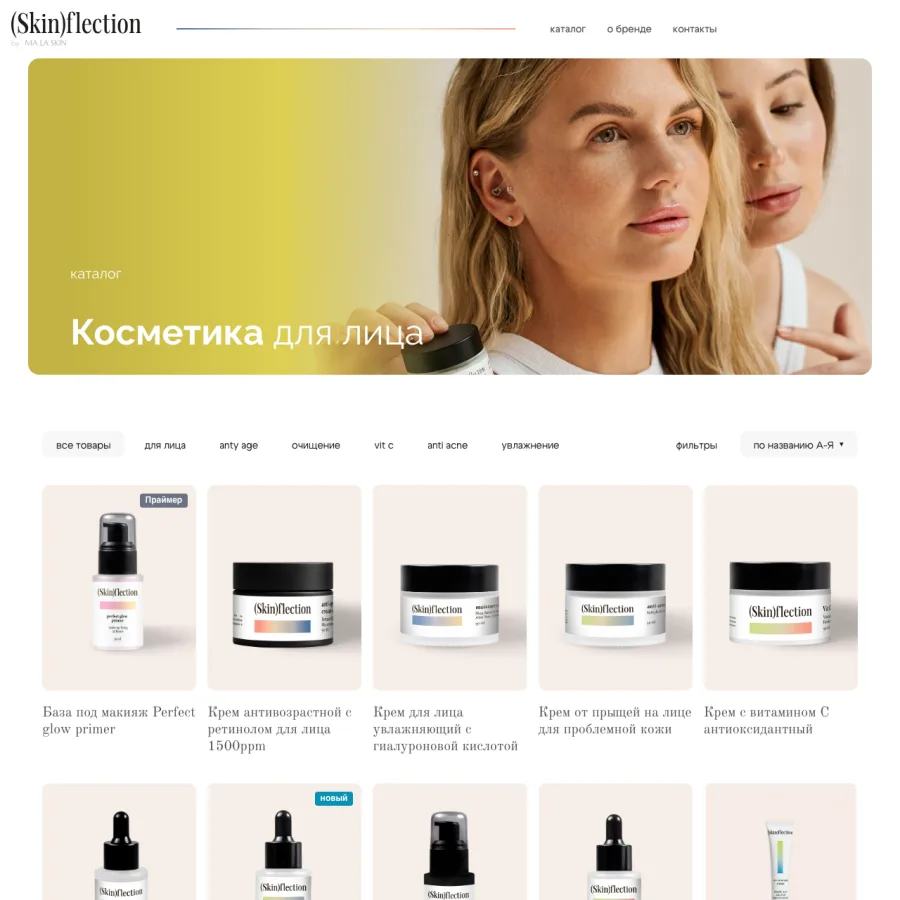
The platform runs on two production instances: Vporyadke and Ma La Skin. One codebase serving two different clients — so replicability is proven in production, not in a slide deck. Each instance is updated on its own schedule: the second client doesn't automatically get everything the first one gets.
250+ projects built by A&W since 2009
We'll review your current site and assess the SEO risks of migrating and the size of your catalog. You'll get a proposal with stages, timelines and a price range. No commitment.